Last week, I attended the Festival of Genomics & Biodata London 2026, the UK’s largest Life Sciences event. As a science-led global TechBio company, our presence was fueled by a clear mission: to demonstrate how combining large-scale multi-omic and health data with proprietary analytics can ultimately help people lead longer, healthier lives.
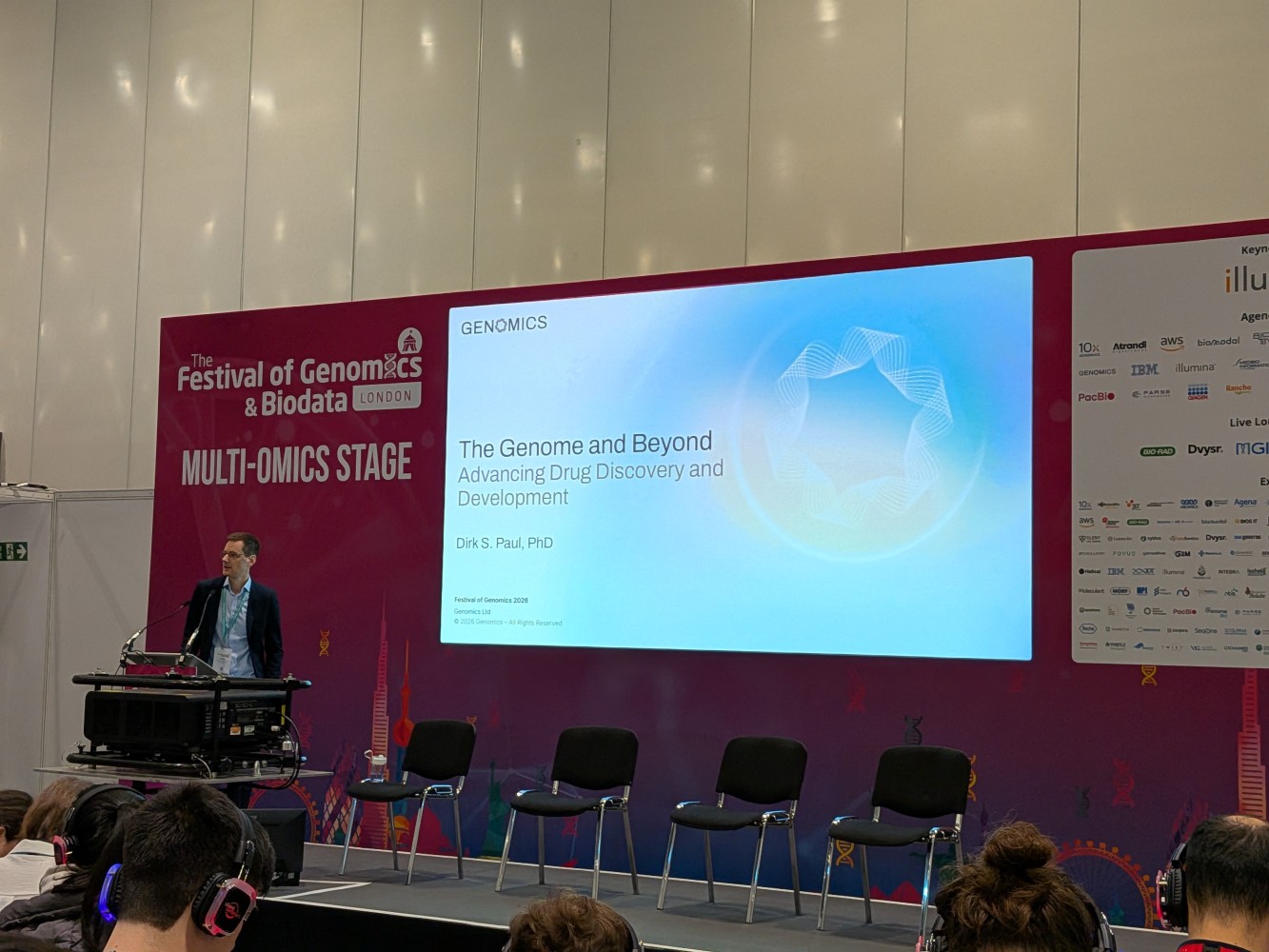
On behalf of Genomics Ltd., I took to the Multi-Omics stage to present “The Genome and Beyond: Advancing Drug Discovery and Development”, to discuss how we are moving ‘beyond the genome’ to advance drug discovery and development through multi-omics.
This is important because almost every second person in England lives with at least one chronic disease [1]. New, safe, and effective treatment options are needed; however, the development of emerging treatments is hampered by low R&D productivity - with 95% of drugs entering clinical trials, failing. This is where multi-omics can make a difference. Data shows that therapeutic targets with human genetic support are 2.6 times more likely to succeed in clinical trials compared to those without [2]. Indeed, the pharmaceutical industry is increasingly recognising that incorporating genetic evidence into R&D is not just a scientific preference but a productivity necessity.
Key Takeaways from the Presentation
To deliver data-driven insights across the drug discovery and development cycle, I showcased Genomics’ world-leading, first of its kind, harmonised genotype–phenotype foundational data resource - Mystra. This foundation allows us to address essential research challenges in biopharma R&D, including the:
1️⃣ Identification and validation of novel therapeutic targets and causal disease drivers,
2️⃣ Elucidation of a therapeutic target’s molecular mechanism of action, and
3️⃣ Clarification of disease heterogeneity to develop patient stratification strategies.
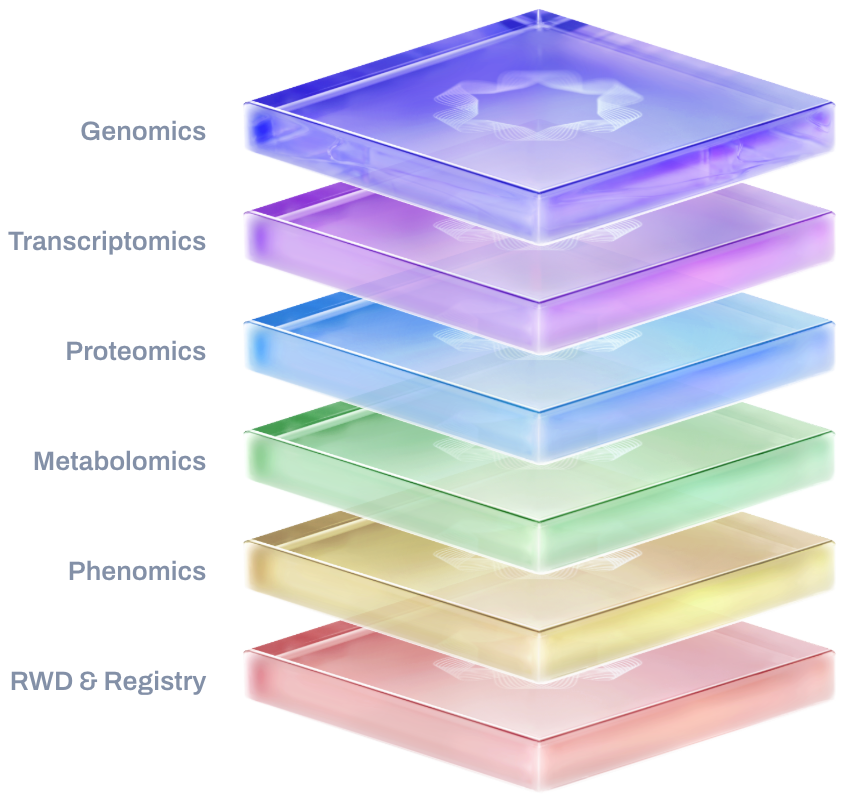
I focussed my presentation on how multi-omics (see figure 2) is key to unlocking actionable insights across the drug development cycle. I next presented case studies that we have delivered with partners in the biopharma industry or academic collaborators. These studies aligned on the following R&D objectives:
Validating with confidence novel therapeutic targets: Integrating multi-omic data helps to identify novel therapeutic targets with high confidence by establishing causal relationships between specific genes and diseases. Such data also allow us to better understand how genetic variants influence downstream disease pathogenesis. For example, with Mystra, we used multi-omic data to validate the therapeutic hypothesis of CTLA-4 as a causal driver in both cancer and autoimmune diseases via shared genetic mechanisms.
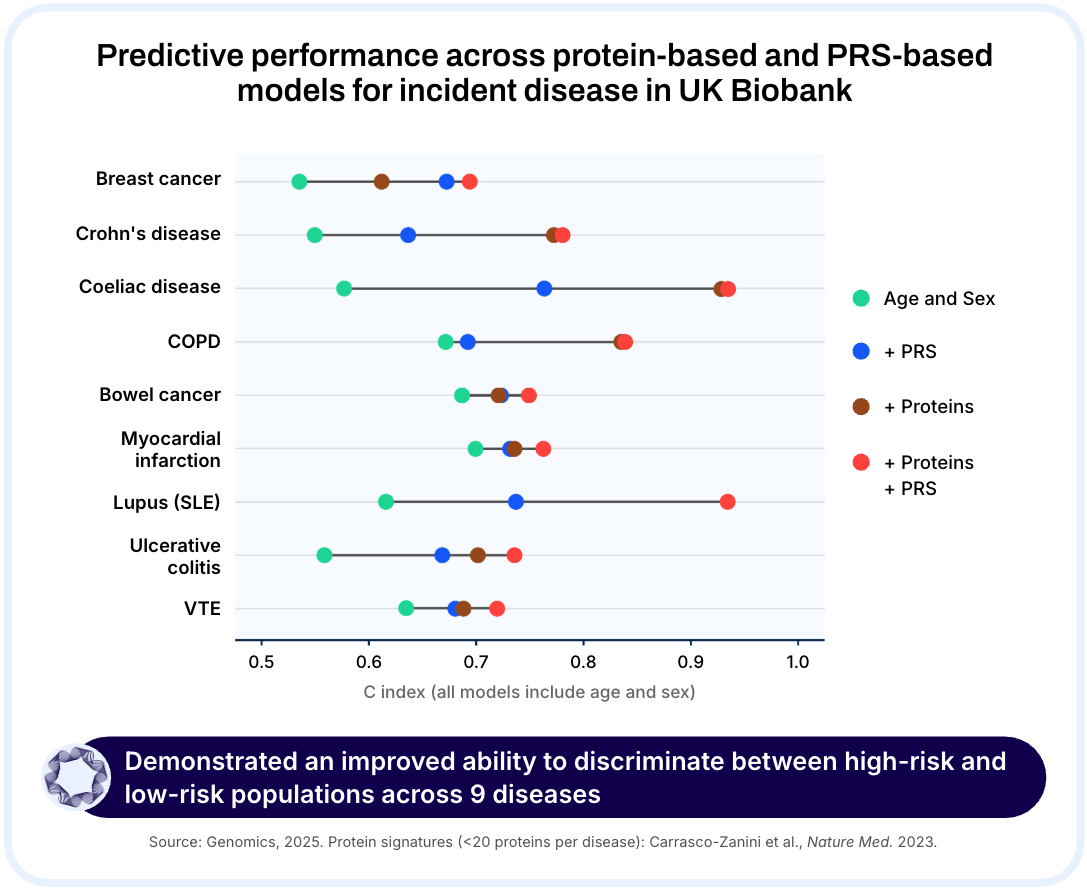
Predicting disease progression and identifying early at-risk individuals: Combining genomic and proteomic data with longitudinal health records offers an opportunity to predict disease progression and identify early at-risk individuals. For example, we demonstrated that specific protein signatures can predict diagnoses up to 15 years early, offering an opportunity to identify predictive biomarkers. Using UK Biobank data, we also showed that integrating polygenic risk scores [3] with proteomics significantly enhances risk prediction accuracy over routine clinical data alone (see figure 3)[4].
Refining disease heterogeneity and enabling patient stratification: “Partitioning” genetic risk delineates disease heterogeneity into molecular subtypes. We demonstrated the value of this analytical approach in the context of obesity. Such partitioned polygenic risk scores advance our understanding of the genetic underpinnings of obesity and enable the development of optimal integrated risk tools. [5]
Looking to the Future
Looking ahead, Genomics is scaling and diversifying our integrated multi-omic data and analyses to advance drug discovery and development even further. This includes
- Increasing the resolution for integrated multi-omic analyses,
- Making multi-omics a priority for underrepresented ancestries, and
- Delivering multi-omic risk scores for personalised prediction of health trajectories.
In parallel, we are enhancing Mystra, our purpose-built target discovery and validation platform, for faster and more in-depth data exploration for drug discovery. We are looking forward to introducing new features throughout the year, including a ground-breaking agentic AI assistant - watch this space…
If you like to learn more about Mystra or our Life Sciences offering, please do get in touch.
By Dirk S. Paul, PhD | Head of Development
- https://digital.nhs.uk/data-and-information/publications/statistical/health-survey-for-england/2024
- https://www.nature.com/articles/s41586-024-07316-0
- https://www.genomics.com/newsroom/polygenic-risk-scores
- https://journals.plos.org/plosone/article?id=10.1371/journal.pone.0307270
- https://www.telegraph.co.uk/business/2025/04/27/do-you-have-the-fat-gene-this-test-could-soon-tell-you/